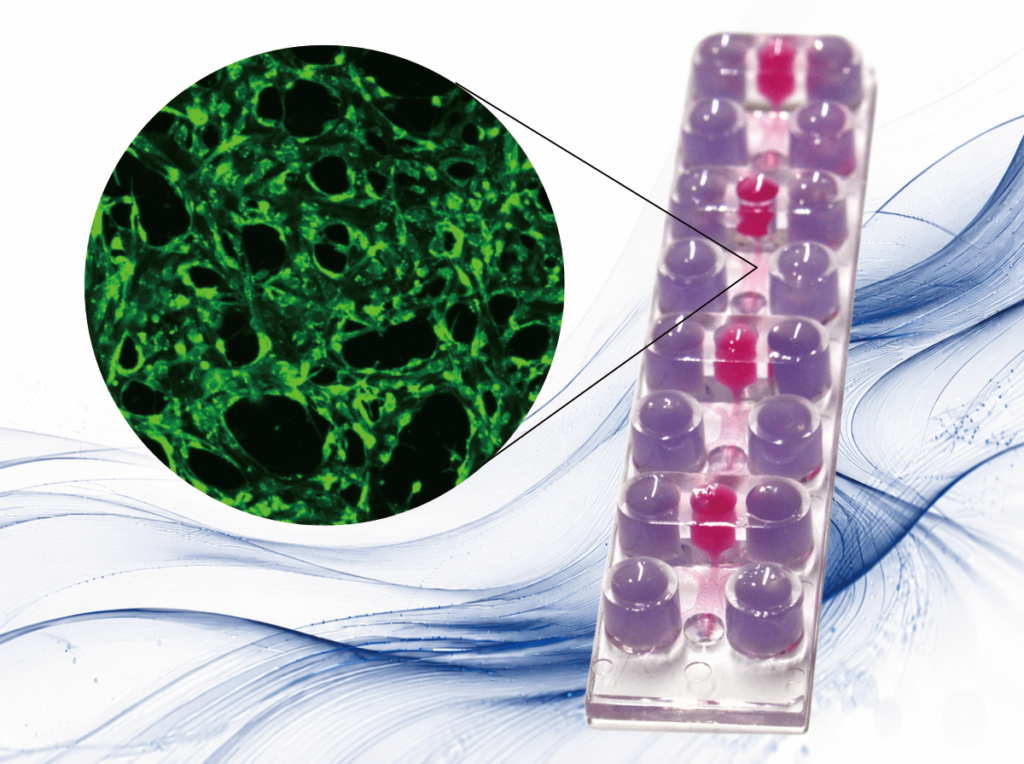


The chip features a structure in which a porous membrane is sandwiched between the upper and lower microchannels. By forming an epithelial layer on the membrane, it can be used for drug transport studies and toxicity evaluation.
Chip –3-Channels–
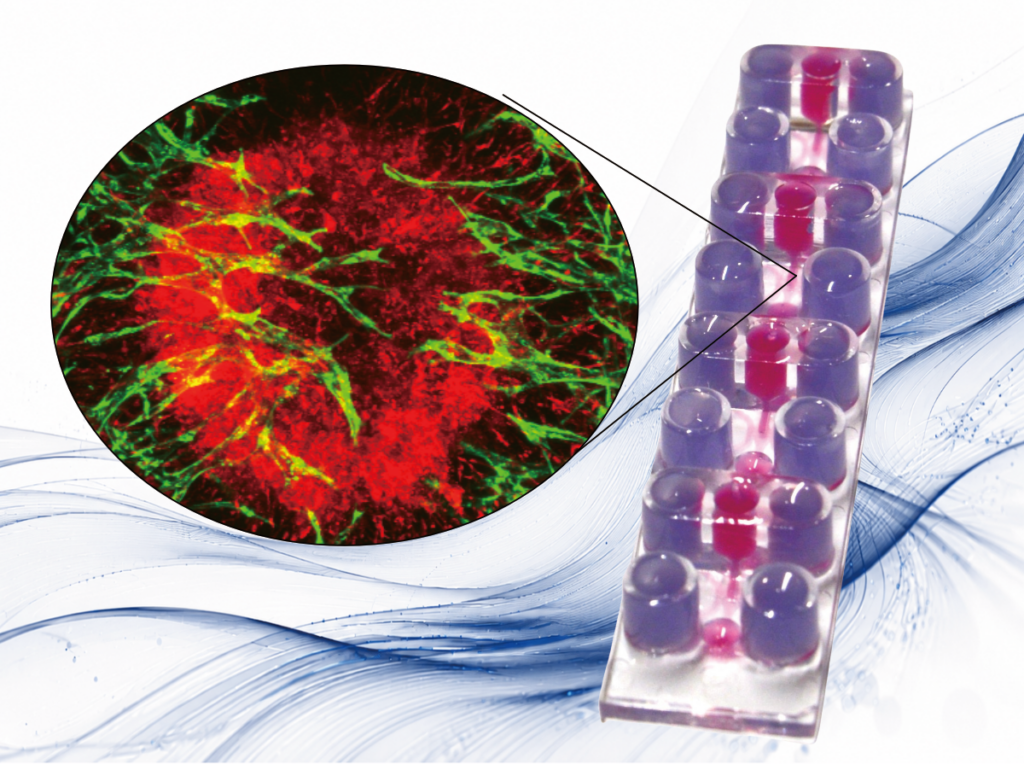
Three parallel microchannels are arranged side by side, with each channel separated by pillar structures. A vascular network can be established in the central channel.
Chip –Spheroid–
This chip features a modified Boncyte™ Chip –3-channels– architecture with added spheroid-trapping structures. It enables the evaluation of spheroid-induced angiogenesis and the construction of cancer models.
Accessories
Chip Holder
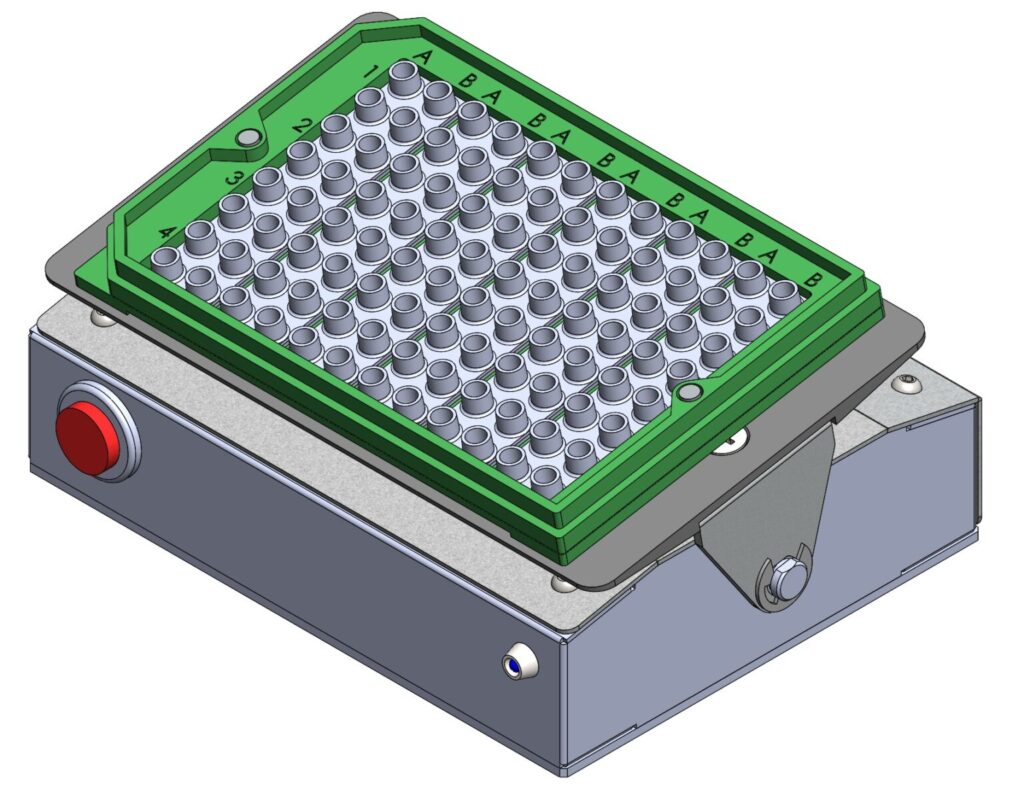
This Boncyte™ Chip–specific holder is designed in accordance with the SBS standard and allows 24 assays to be conducted by housing six Boncyte™ Chips.
Instruments
Rocker
By using a rocker-based system, the culture medium in the microchannels is gently agitated, allowing fresh medium to be continuously supplied to the cells.
The Story Behind the Name “Boncyte”
The name Boncyte is a coined word that brings together “Bonsai” and “~cyte,” meaning cell.
Bonsai is more than a horticultural art—it is a philosophy of patience, precision, and respect for nature, where a complex living system is carefully shaped and sustained within a limited space.
This philosophy closely mirrors our approach to microphysiological systems (MPS). By recreating essential aspects of the in vivo environment on a microfluidic chip, we seek to capture biological complexity at a miniature scale without losing its authenticity.
As a Japan-based MPS startup, we draw inspiration from the spirit of bonsai craftsmanship—meticulous design, thoughtful refinement, and unwavering attention to detail. Guided by this philosophy, we strive to develop high-performance MPS solutions that grow alongside our users’ scientific needs.